ServicesDental Implants
Dental Implants in Double Oak, TX
A dental implant replaces the root and the tooth. We place a small post in the jaw, let it bond with bone, then attach a crown that looks and chews like your own. You'll know your material choices and your full treatment plan before we start.
What an implant is, and when it makes sense
An implant has three parts. The post sits in the bone. The abutment connects the post to the tooth. The crown is the part you see and chew with. Each part comes in more than one material, and that choice affects how the tooth looks, how long it holds up and what it costs.
Implants are a good fit when a tooth is missing or can't be saved, your gums are healthy and there's enough bone to hold the post. If a tooth can still be fixed with a root canal, we'll tell you that first. If you're missing most of your teeth, dentures held by a few implants may suit you better, and we'll talk through both.
Our dentist is board-certified, with over 10 years of experience in general and implant dentistry. That matters most at the planning stage, where the right post size and angle are decided.
What your implant work includes
- 3D scan and planning
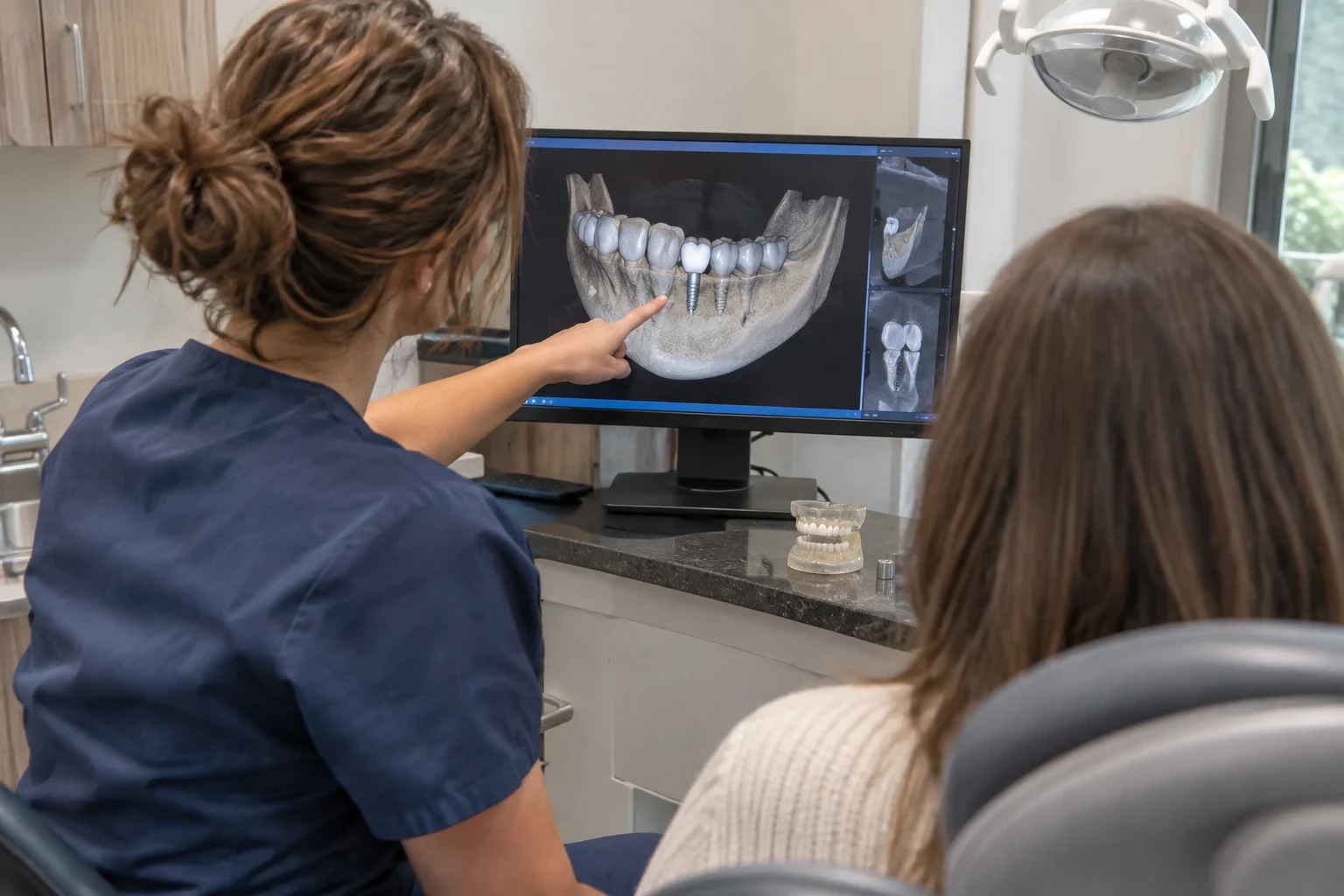
- A CBCT scan, if needed, shows bone height, width and nerve position. We use it to plan where the post goes before you're in the chair.
- Titanium or zirconia post
- Titanium is the long-standing choice. It bonds well with bone and has the most research behind it. Zirconia is metal-free and tooth-colored, which some patients want for thin gums or a metal sensitivity, but it has fewer size options.
- Abutment matched to the site
- Front teeth often get a tooth-colored abutment so no gray shows through the gum. Back teeth usually get titanium for strength.
- Crown material choice
- Solid zirconia is very hard to chip and works well for molars and heavy biters. Porcelain-layered crowns match neighboring front teeth more closely but can chip under a lot of force. We show you both and explain which fits where.
- Healing checks
- We see you during healing to make sure the gum is closing well and the post is stable before the crown goes on.
Signs an implant may be right for you
A gap you chew around
If you've started chewing on one side to avoid a missing tooth, the other side takes extra wear.
Neighbor teeth are shifting
Teeth next to a gap tend to tip into it over time. That can change your bite and open spaces where food gets trapped.
A cracked tooth that keeps failing
A tooth that has had a crack, a big filling and a crown and is still breaking may be better removed and replaced.
A loose bridge or partial
If a bridge or partial denture rocks, rubs or keeps coming out, an implant can give a fixed tooth that doesn't rely on clasps or neighbor teeth.
Bone loss under a gap
Bone that has nothing to support slowly shrinks. Placing an implant sooner keeps more of it.
How it goes, step by step
- 1
Evaluation
We do an exam, digital X-rays and a CBCT scan if needed. You get a written treatment plan with your material options side by side.
- 2
Placing the post
The area is numbed with local anesthetic. Most patients say it feels like pressure, not pain. If a tooth has to come out first, our extractions page covers that part.
- 3
Healing
The bone grows onto the post over a few months. You may wear a temporary tooth so there's no visible gap.
- 4
Crown
We take a scan or impression, check the shade against your other teeth and attach the final crown. Then we check your bite so it hits evenly.
What sets the cost
There's no single price for an implant. It comes down to the parts you pick and what your mouth needs before the post can go in. Your treatment plan breaks out each piece, so you see the whole picture up front.
- Post and crown materials
- A zirconia post or a custom abutment costs more than standard titanium parts. The crown material you choose moves the price as well.
- Bone and gum condition
- Some patients need bone added before a post can go in. If that's you, we'll explain what it involves and how it changes the plan.
- Number of teeth
- A single implant, an implant bridge and implant-held dentures are priced very differently.
- Insurance and payment
- Many PPO plans pay toward part of the work, and we're in-network with 15+ major ones. You can also spread the balance out with financing at 0% interest for as long as 24 months, and seeing if you're preapproved won't touch your credit score. Patients without insurance can join our in-house Membership Plan.
Dental implant questions we hear
Something not covered here? (940) 350-4964
Is titanium or zirconia better?
For most people, titanium. It has the longest track record and comes in the most sizes. Zirconia makes sense if you have thin gums near a front tooth or a known metal sensitivity. We'll look at your scan and tell you which we'd pick and why.
Does getting an implant hurt?
The area is numb during the procedure, so most patients feel pressure rather than pain. Afterward, expect some soreness and swelling for a few days. Many people manage with over-the-counter pain relief.
How long does the whole thing take?
From post to final crown is usually a few months, mostly healing time. If you need a tooth removed or bone added first, it takes longer. Your treatment plan lays out the timeline.
Will my PPO insurance cover it?
Some plans cover part of an implant, some cover only the crown and some cover none. We're in-network with 15+ major PPO plans and will check your benefits so you know your share before you decide.
How do I care for an implant?
Brush and floss it like a natural tooth. The crown can't get a cavity, but the gum around it can get infected, so regular cleanings matter.
Find out which implant fits your mouth
For $25, the focused evaluation gets you a full exam and digital X-rays, plus a CBCT scan when your case calls for one. Then we sit down with you, map out the treatment and answer your questions, so you walk out knowing your material options and what each one costs.