ServicesDentures
Dentures in Double Oak
We make full and partial dentures that fit well, chew well and look like a natural smile. Before anything gets made, we put the materials side by side, from acrylic and flexible nylon to metal frames and implant-supported sets, so you know what each one does well.
Which denture fits you, and what it is made of
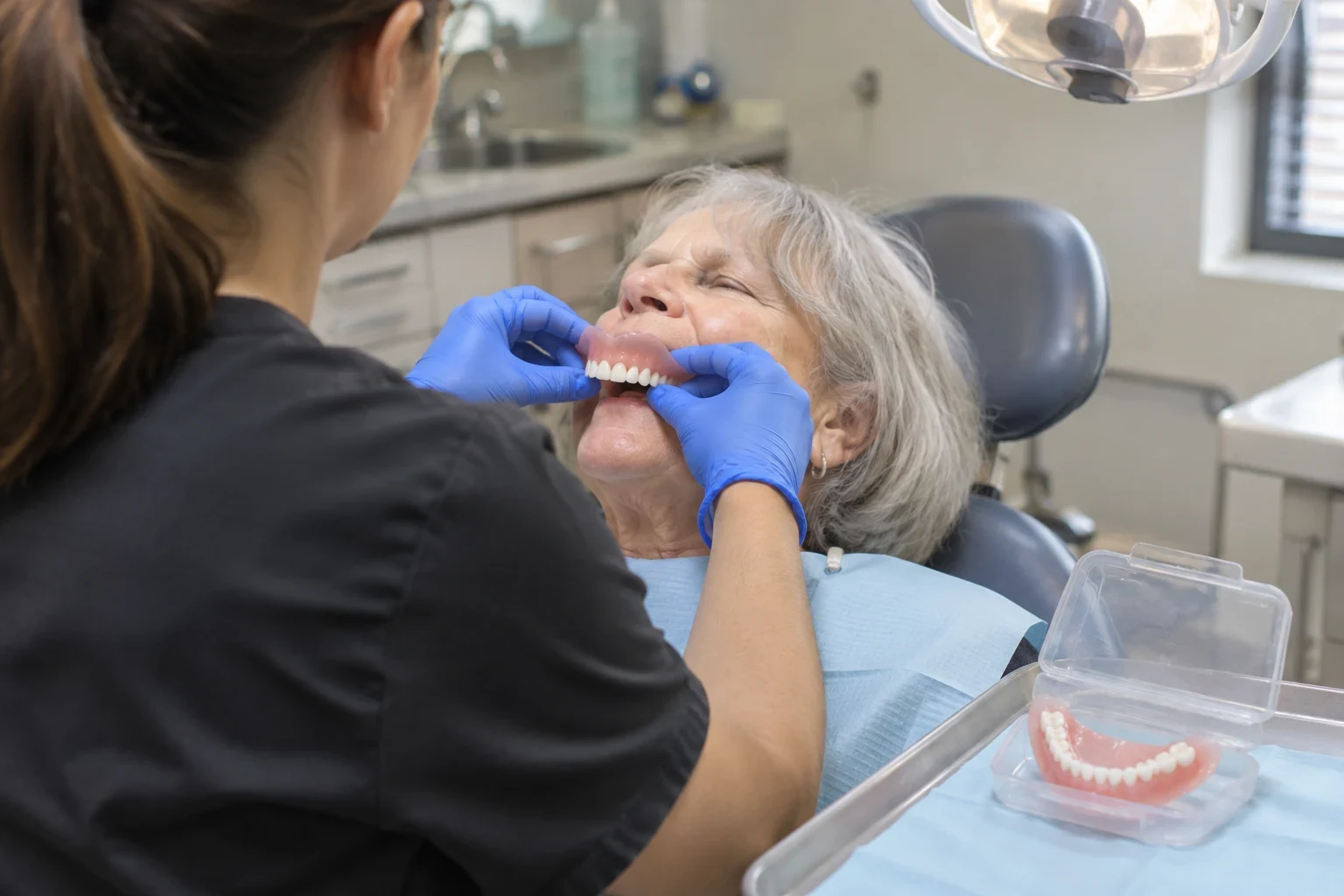
A denture is a removable set of teeth. It can rest on your gums, hook onto teeth you still have, or snap onto dental implants. Full dentures replace a whole arch. Partials fill the gaps when some healthy teeth remain.
The material changes how it feels every day. Acrylic is light and easy to adjust or reline. A cast metal frame is thinner and stronger, so a partial takes up less room in your mouth. Flexible nylon hides the clasps, but it is harder to add a tooth to later. We explain these trade-offs in plain words, then you pick.
Our dentist is board-certified, with over 10 years of experience in general and implant dentistry. That helps when a denture might sit on implants down the road, because we plan for it from the first visit.
What your denture care includes
Exam and digital X-rays
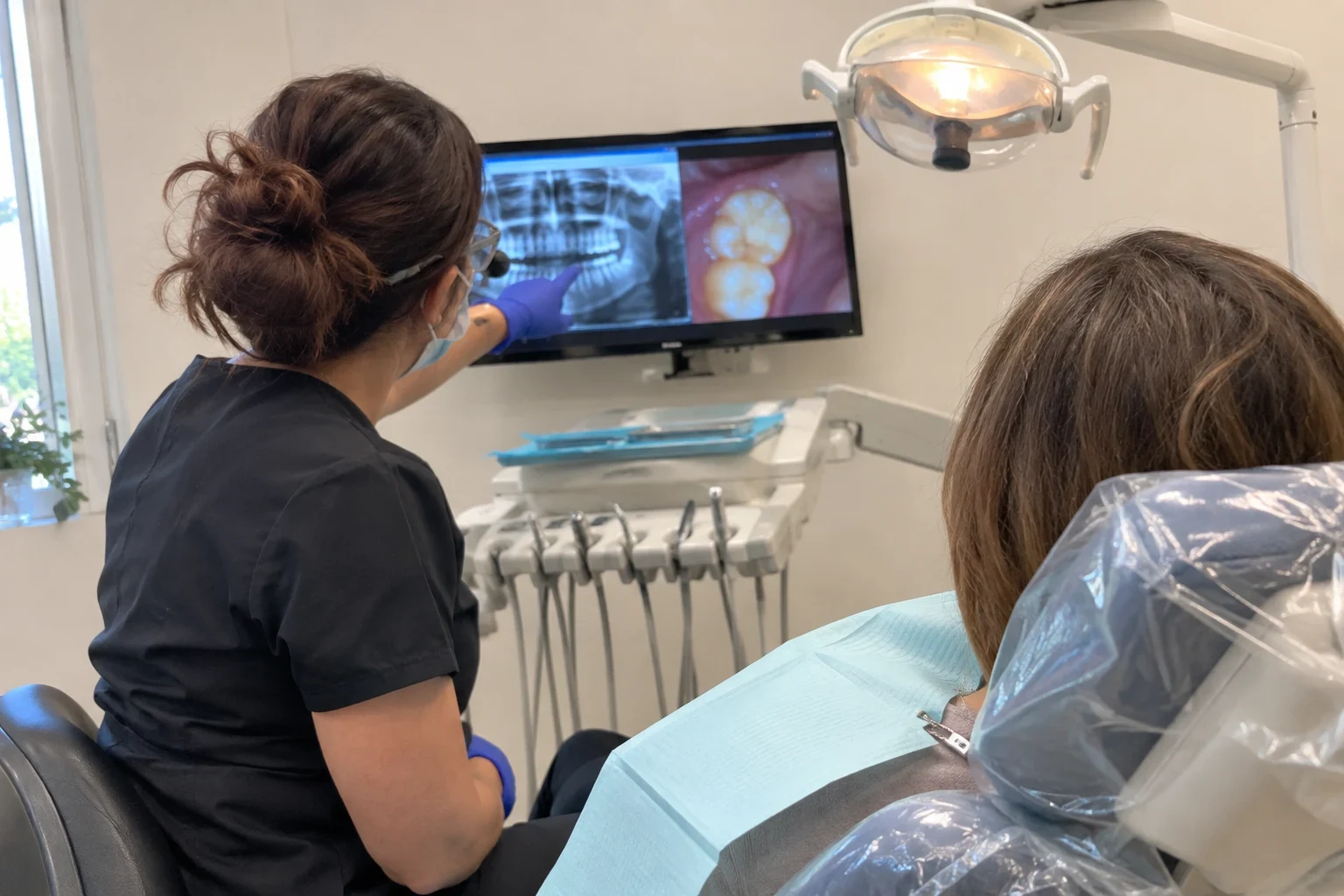
We check your gums, the bone under them and any teeth that are left. If implants could be part of the plan, a CBCT scan shows how much bone there is to work with.
Full dentures
A pink acrylic base holds a full row of teeth. Uppers hold by suction against the roof of your mouth. Lowers have much less to grip, which is why many patients pair them with implants.
Partial dentures
We make partials on a cast metal frame or in flexible nylon. Metal lasts longer and can be repaired or added to. Nylon feels softer and shows no metal.
Implant-supported dentures
A few dental implants in the jaw give the denture something to click onto. It stops sliding, and you can bite with more force.
Acrylic or porcelain teeth
Acrylic teeth are quiet and easy on the teeth they bite against. Porcelain resists wear and stains, but it can chip and may click when you talk.
Adjustments and relines
Gums shrink after teeth come out. We ease sore spots and reline the base so the fit keeps up with those changes.
Signs dentures may be the right call
- Several teeth already missing
- Gaps let nearby teeth tip and drift. Chewing shifts to one side, and that side wears faster.
- Too many teeth to save one by one
- When deep decay or cracks run through many teeth, fixing each one can cost more than it is worth. We tell you straight when that is the case.
- An old denture that rocks or rubs
- Looseness means the ridge under it has changed. A reline or a new set stops the slipping and the sore spots.
- Skipping foods you like
- If you pass on apples, steak or raw vegetables because chewing hurts, it is worth an exam.
- Loose teeth from gum disease
- Advanced gum disease can leave teeth too loose to keep. A denture or implant plan can follow once the area heals.
How getting dentures works
- 1
Evaluation and treatment plan
For $25, our focused evaluation gets you digital X-rays and a thorough, comprehensive exam, with a CBCT scan added only when your case calls for it. Treatment planning and a sit-down consultation are part of it too. We walk through each option with you and put the cost of every part of the plan in writing.
- 2
Extractions, if needed
If some teeth need to come out, we handle extractions first. An immediate denture can go in at that visit so you are not without teeth while you heal.
- 3
Impressions and try-in
We take impressions and record how your jaws meet. You see a wax try-in with the teeth set and can change shade or shape before it is finished.
- 4
Fitting day
We seat the denture, check for pressure spots and show you how to put it in, take it out and clean it.
- 5
Follow-up visits
The first few weeks often bring a sore spot or two. Come back and we adjust it. Most patients settle in after a handful of tweaks.
What moves the cost of dentures
We set a price once we have examined you, and the breakdown comes to you in writing. If you carry PPO coverage, odds are good your plan is one of the 15+ major PPO dental insurance plans our office is in-network with. Patients without coverage can sign up for our in-house Membership Plan. You can also spread the cost with 0% interest financing for up to 24 months, and checking for preapproval has no impact on your credit score.
- Full or partial
- A full arch takes more teeth and a larger base than a partial filling a few gaps.
- Base and frame material
- Acrylic, cast metal and flexible nylon each cost differently to make. Metal frames take more lab work up front but tend to last.
- Type of teeth
- Porcelain teeth usually cost more than acrylic. Higher-grade acrylic sits in between.
- Extractions and healing
- Teeth that need removal add visits. An immediate denture also needs a reline once the gums settle.
- Adding implants
- Implant-supported dentures cost more than a standard set because of the implants and their parts. Many patients feel the grip is worth it.
Denture questions we hear often
- How long will my dentures last?
- It depends on what they are made of and how your jaw changes. Most dentures need a reline every so often and a new set after several years. Metal-frame partials tend to outlast acrylic ones. We check the fit at your regular visits.
- Should I get dentures or dental implants?
- It comes down to your bone, your budget and how much grip you want. A standard denture costs less up front. Implants or an implant-supported denture stay put and keep more chewing power. We show you both on your scan so you can decide.
- Will people be able to tell I wear dentures?
- A well-made set looks like natural teeth. You choose the tooth shade and shape at the try-in, and nylon partials hide the clasps. Speech may feel odd for a week or two.
- Does my insurance cover dentures?
- Many PPO plans pay part of the cost, and we are in-network with 15+ major ones. We check your benefits before we start. If you have no insurance, our Membership Plan and financing can help.
- Can I eat normally with dentures?
- Start with soft foods cut small and work up. Sticky and very hard foods stay tricky with a standard denture. Implant-supported sets handle tougher foods much better.
Talk through your denture options with us
Bring your questions and any old denture you have. We will look at your mouth, explain the choices that suit it, and give you a clear plan.