ServicesRoot Canals
Root Canals in Double Oak
A root canal clears infection from inside a tooth so you can keep it. We numb the area well, work at a steady pace and explain the filling and crown materials before we start. Most patients feel much better within a few days.
What a root canal does and when it makes sense
Inside every tooth is soft tissue called the pulp. When decay, a crack or an old deep filling lets bacteria reach it, the pulp gets inflamed or dies. That causes the throbbing ache, and it can turn into an abscess at the root tip.
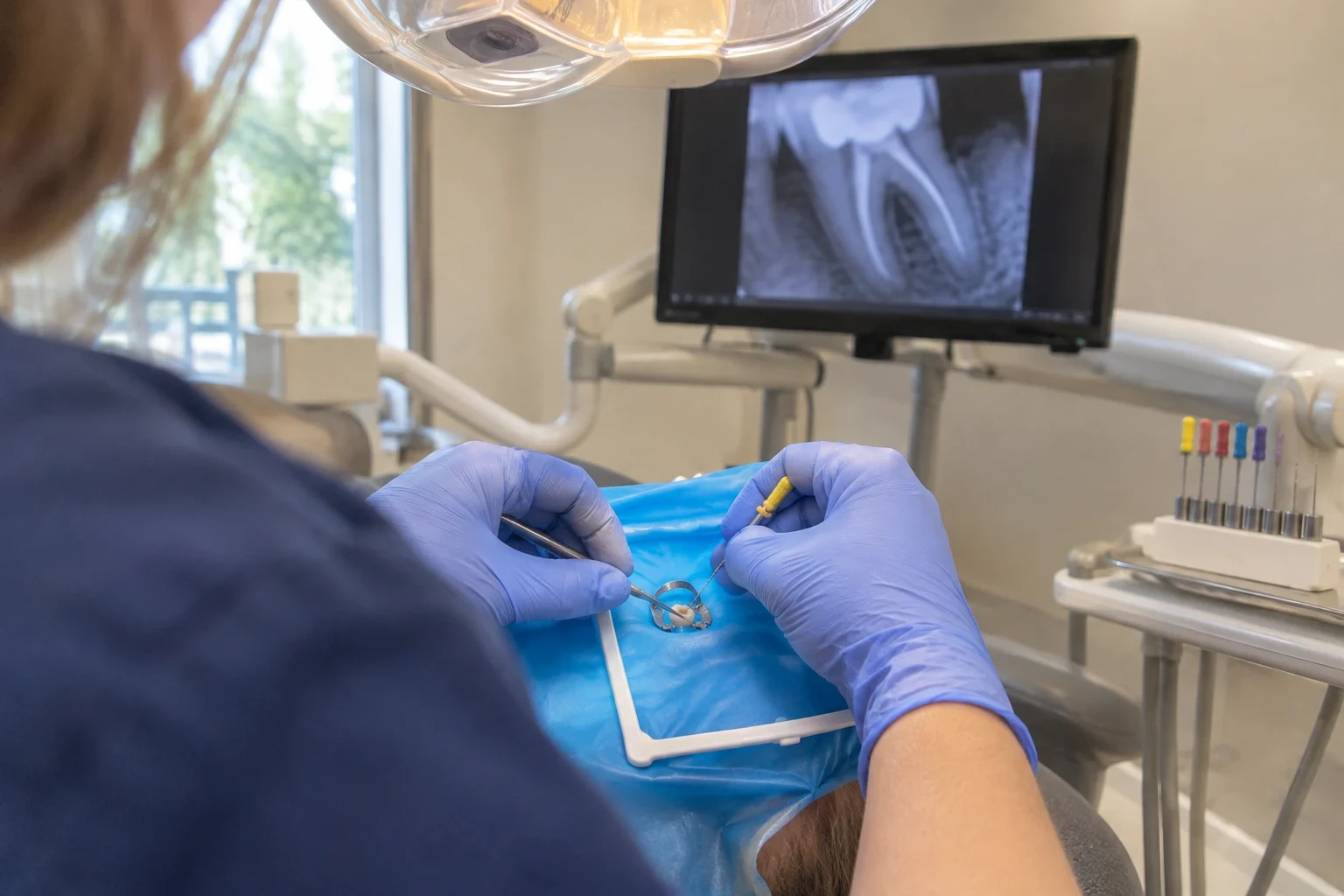
A root canal removes that tissue, cleans and shapes the canals, then fills and seals them. The outside of the tooth stays in place. Your own root keeps holding the bone and keeps the teeth beside it from drifting.
It is the right call when the tooth has enough healthy structure left to hold a crown. If it does not, we tell you plainly and talk through extractions and dental implants instead. Our dentist is board-certified and has over 10 years of experience in general and implant dentistry, so you get a fair look at both paths.
What your root canal includes
Exam and digital X-rays
We test the tooth with cold and tapping, then take digital X-rays to see the root shape and any infection at the tip. If the roots are curved or hard to read, a CBCT scan gives a 3D view.
Thorough numbing
We test that the tooth is numb before we begin. Inflamed teeth can take extra anesthetic, and we give it rather than rush you.
Cleaning and shaping the canals
Fine flexible files remove the pulp and bacteria. We rinse the canals with a disinfecting solution as we go.
Gutta-percha seal
The canals are filled with gutta-percha, a rubbery material from tree sap that fits the canal shape, plus a sealer cement. It has a long track record and seals out bacteria well.
Temporary filling
A temporary closes the top of the tooth until your crown is ready. It is soft enough that you should chew on the other side for now.
Crown planning
Back teeth almost always need a crown after a root canal because the tooth turns more brittle. We go over the material choices so you pick with the facts in front of you.
Signs a tooth may need a root canal
Pain that lingers after hot or cold
A quick zing that fades is common. Pain that hangs on for 30 seconds or more after a hot drink points to an inflamed nerve.
Throbbing that wakes you up
A deep ache that pulses, gets worse lying down or needs pain relievers to sleep is a sign the pulp is in trouble.
A pimple on the gum
A small bump near the root that drains or tastes salty is usually an abscess finding a way out. It may stop hurting, but the infection is still there.
A tooth turning gray
A tooth that darkens after a bump or fall often has a dying nerve, even with no pain.
Swelling or pain when biting
Tenderness when you chew, or puffiness in the gum or face, means the infection has reached the tissue around the root.
How the visit goes
- 1
Confirm the diagnosis
We test the tooth, read the X-rays and tell you what we see. You hear the options and the cost before anything else happens.
- 2
Numb and isolate
Once you are numb, we place a small rubber sheet around the tooth. It keeps the area dry and clean, and it stops rinse water from running into your mouth.
- 3
Clean, fill and seal
Most front teeth take one visit. Molars have three or four canals and can take longer, sometimes two visits if the infection is heavy.
- 4
Recovery and crown
Expect some soreness for a few days, usually handled with over-the-counter pain relievers. We set up the crown visit a couple of weeks later, once things settle.
What moves the cost of a root canal
Before any work begins, you get the full cost in writing, crown included, so there are no late surprises. Our office is in-network with 15+ major PPO dental insurance plans. Our staff looks up your benefits ahead of time so you know your share. No insurance? Our in-house Membership Plan is built for uninsured patients.
- Which tooth
- A front tooth usually has one canal. A molar has three or four, takes more time and costs more.
- Crown material
- Zirconia is very strong and good for back teeth where you chew hard. Porcelain fused to metal is a proven middle option. All-ceramic looks the most natural up front but is less suited to heavy grinders. Gold lasts a long time but is a look many people skip.
- Root shape and past work
- Curved, narrow or calcified canals take longer. Redoing an old root canal is more involved than a first one.
- Posts and buildups
- If a lot of the tooth is gone, we may need a post and a core buildup to give the crown something solid to hold.
- Spreading payments
- We offer 0% interest financing for up to 24 months. Checking whether you preapprove has no impact on your credit score.
Root canal questions we hear
Something not covered here? (940) 350-4964
Does a root canal hurt?
Once the tooth is numb, the treatment should feel a lot like getting a filling. Most of the pain people remember comes from the infection before treatment, not the fix. Some soreness for a few days afterward is normal.
Why not just pull the tooth?
Sometimes pulling it is the better choice, and we will tell you so. But the gap it leaves usually needs a bridge or a dental implant, which adds time and cost. If the tooth can be saved, your natural root is hard to beat.
Do I really need a crown afterward?
On molars and premolars, almost always. Without the pulp, the tooth gets drier and cracks more easily under chewing force. A front tooth with little damage can sometimes do fine with just a filling.
Which crown material should I pick?
For back teeth, we usually lean toward zirconia because it stands up to grinding. For front teeth, all-ceramic gives the most natural look. We lay out the trade-offs and the choice is yours.
Can I go back to work the same day?
Yes, most people head back to work or school afterward. The numbness in your lip and cheek can take a few hours to wear off. Hold off on eating until it does so you do not bite your cheek or tongue.
Find out if your tooth can be saved
Start with our $25 focused evaluation. It includes an exam, digital X-rays, a CBCT scan if needed and a clear treatment plan.