ServicesExtractions
Tooth Extractions in Double Oak
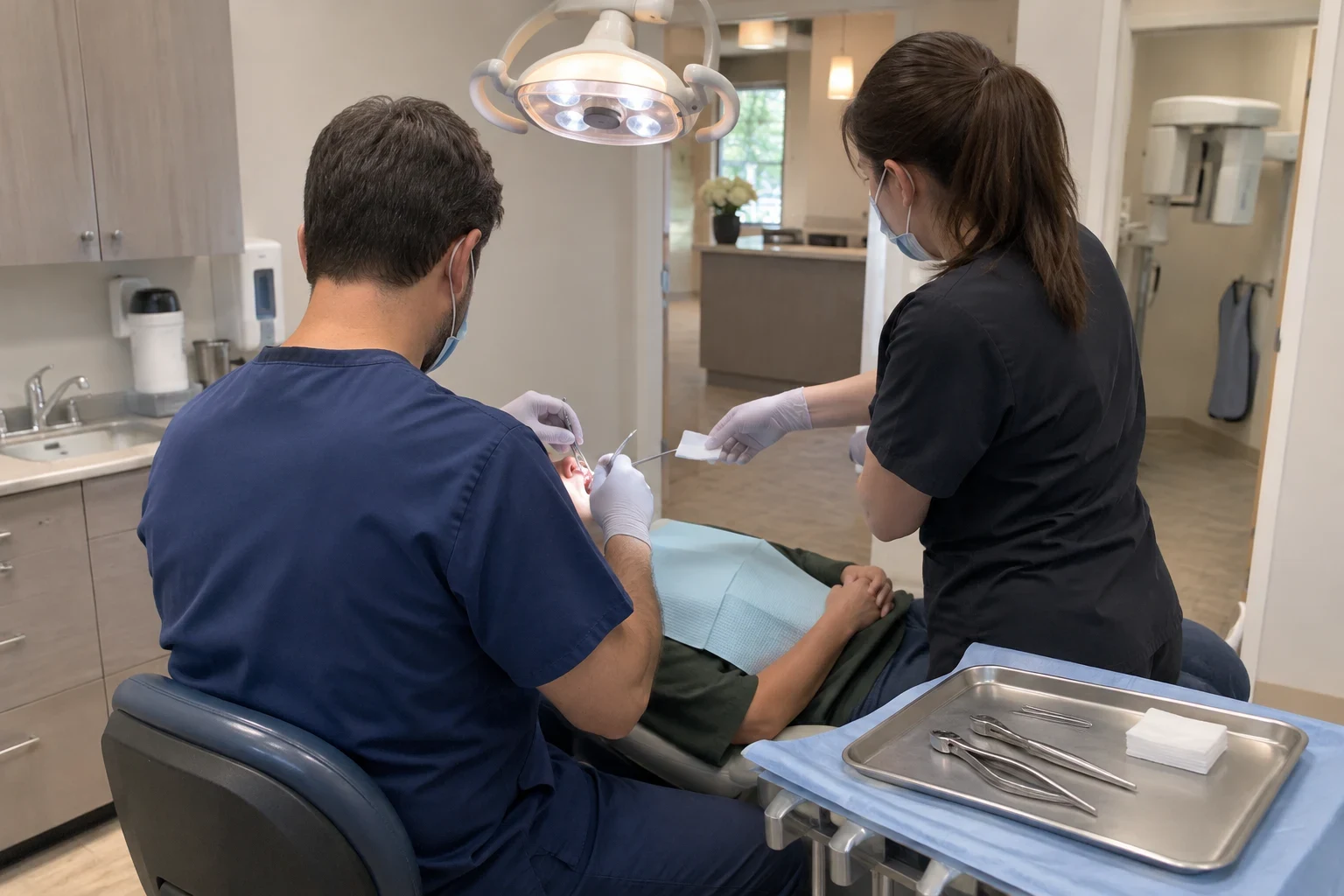
When a tooth is too broken, infected or loose to keep, we take it out gently with good numbing and a steady hand. Before we start, we walk you through what can fill the space later, so you leave with a plan and not just a gap.
When Pulling a Tooth Is the Right Call
We try to save teeth first. If a tooth can be fixed with a filling, a crown or one of our root canals, we will tell you that plainly. An extraction makes sense when the tooth is cracked below the gumline, the infection has gone too far, or there is not enough bone left to hold it.
Taking a tooth out is only half the decision. The other half is what replaces it. A dental implant, a bridge and a partial denture are each made from different materials, and each one changes how the socket should be handled on the day of the extraction. That is why we talk about the replacement before we pick up an instrument.
Our dentist is board-certified and brings over 10 years of experience in general and implant dentistry, so the person removing your tooth is also thinking about the implant or denture that may come after it.
What Your Extraction Includes
- Exam and digital X-rays
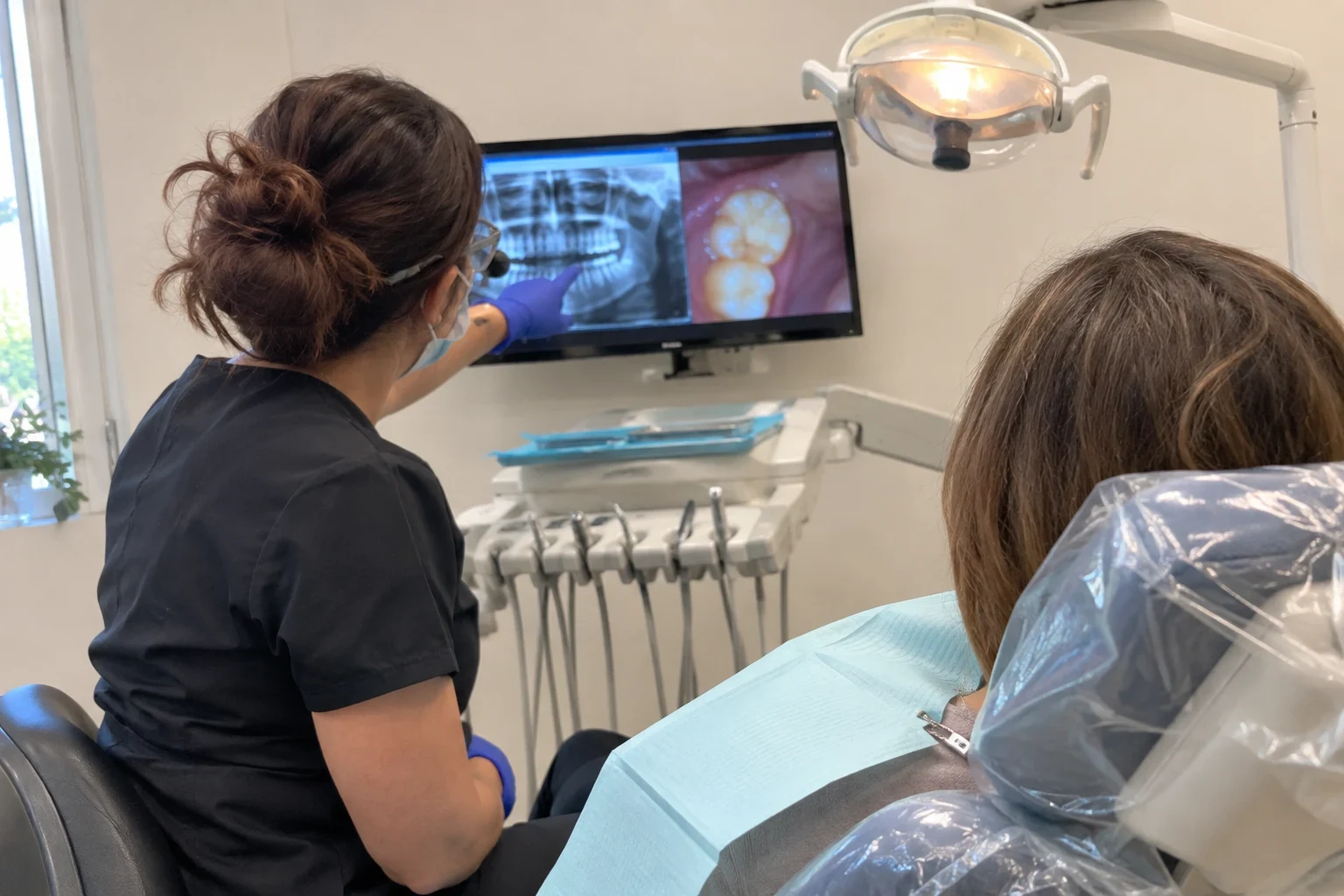
- We look at the roots, the bone around them and the nerves nearby. If roots are curved or close to a sinus, a CBCT scan gives us a 3D view before we begin.
- Simple or surgical removal
- A tooth that is fully above the gum usually comes out in one piece. A broken or deeply rooted tooth may need to be sectioned and lifted out in parts, which is gentler on the bone around it.
- Socket preservation when needed
- If you plan on a dental implant, we can place bone graft material in the socket right after removal. It helps hold the shape of the jaw so there is solid bone for the implant months later. If you are going with a partial or bridge, a graft is often not needed.
- Stitches and gauze
- Most stitches we use dissolve on their own in a week or two, so there is usually nothing to remove.
- Clear aftercare
- You go home with written instructions on bite pressure, eating, rinsing and what normal healing looks like. If something feels off, you call us.
When a Tooth Is Likely Past Saving
A split that reaches the root
Once a fracture travels down into the root, there's no good way to seal it. Every bite flexes the tooth again, so the pain keeps returning.
A gum bump or swelling near one tooth
That's often a sign of infection at the tip of the root. A root canal can sometimes rescue the tooth. If too little of it is left to rebuild, taking it out is the safer path.
Wobbling when you chew
Gum disease that has gone on a long time wears down the bone holding a tooth in place. When most of that bone is gone, the tooth won't tighten up again.
Decay down into the root
If the cavity has left too little solid tooth to support a crown, rebuilding it costs more than the tooth will give back.
No room, or a stuck back molar
Not every extraction is about damage. Sometimes it's about space. Molars trapped under the gum are covered on our Wisdom Teeth Removal page.
How the Visit Goes
- 1
Look and plan
We examine the tooth, take X-rays and explain what we see. You hear the options for the gap, including the trade-offs of an implant, a bridge or a partial, and the cost of each.
- 2
Numb the area well
We use local anesthetic and wait until the area is fully numb. You will feel pressure but should not feel sharp pain. If you do, tell us and we stop and add more.
- 3
Remove the tooth
We loosen the tooth slowly and lift it out. Taking our time protects the bone and the teeth next to it.
- 4
Close and protect the socket
We clean the socket, place graft material if it fits your plan, add stitches and have you bite on gauze. Then we go over aftercare before you head home.
- 5
Check the healing
We see you again to make sure the site is closing well. If an implant or denture is next, we set the timeline then.
What Changes the Price of Pulling a Tooth
We can't price an extraction honestly until we've seen the tooth and its X-rays. Once we have, you get the full breakdown in writing, and nothing starts until you've read it. If you carry PPO coverage, we work in-network with 15+ major PPO dental insurance plans. No insurance? Our in-house Membership Plan is built for uninsured patients.
- Simple or surgical
- A tooth that lifts out whole is a shorter visit. One that is broken off at the gum or still buried has to be sectioned, and that takes more time.
- How many roots, and where they sit
- Front teeth usually have one root. Molars can have three, and roots that curve or sit close to a nerve or the sinus need slower, more careful work.
- Graft material for a future implant
- Packing the socket with bone graft material keeps room for a dental implant later. It shows up as its own line, and you choose whether to add it.
- Type of imaging
- Regular X-rays are enough for most teeth. We only add a CBCT scan when the roots or what's around them need a 3D look.
Common Questions About Extractions
Something not covered here? (940) 350-4964
Will it hurt?
Once you're numb, expect pressure and some pulling, but not sharp pain. If you feel anything sharp, say so and we add more anesthetic. Plan on a few sore days after. Over-the-counter pain relief handles it for most people, and we'll tell you which one and how much.
Do I have to replace the tooth?
Not in every case. A back tooth out of sight can sometimes be left open, but the teeth beside it may tip or shift into the gap over the years. We lay out what waiting looks like and what each replacement involves, and the choice is yours.
Which replacement is best after an extraction?
That comes down to how much bone you have, how many teeth are gone and what you want to spend. A dental implant is a titanium post that stands alone and leaves nearby teeth untouched. A bridge leans on the teeth on each side, and a partial denture comes out for cleaning and costs the least up front. Our Dental Implants and Dentures pages explain each one in more detail.
How long until I feel normal?
After a simple extraction, most patients are back to their usual day within a day or two. A surgical removal may need a few extra days. The gum closes in about two weeks, and the bone under it keeps rebuilding for several months.
What is a dry socket and how do I avoid it?
A dry socket happens when the clot that forms in the empty socket gets knocked loose before it should, and the bone is left bare. For the first few days, don't use straws, don't smoke and don't spit hard. If the ache is getting worse after the third day instead of easing, give us a call so we can check it.
Can I spread out the cost?
You can. Financing is available at 0% interest for up to 24 months. Seeing whether you're preapproved won't have any effect on your credit score.
Talk Through Your Tooth Before It Comes Out
Patients come to us from Flower Mound, Highland Village, Argyle and nearby. Call, tell us what is going on, and we will set up a visit where you see the X-rays and hear every option for the space.