ServicesEmergency Dentistry
Emergency Dentistry in Double Oak, TX
A cracked tooth, a lost crown or a toothache that keeps you up at night needs a clear answer. We find the cause and ease the pain. Then we walk you through the material options for the fix, from a temporary filling to a crown or an implant.
Urgent tooth problems, handled one step at a time
Most dental problems that feel urgent come down to a few things: a cracked or broken tooth, an infection, a lost filling or crown, or a tooth knocked loose. Each one has a short-term fix and a long-term fix. We do the first so you can eat and sleep again. Then we plan the second with you.
The fix you end up with depends on materials. A temporary filling buys time. Composite bonding is quick and matches your tooth, but it wears faster on a back molar. A zirconia crown is tough enough for heavy chewing. Porcelain looks the most natural on a front tooth. We explain those trade-offs in plain words before anything goes in your mouth.
Our dentist is board-certified, with over 10 years of experience in general and implant dentistry. That matters when a tooth can't be saved, because dental implants, a bridge or a partial denture are real options here, not afterthoughts.
What urgent care at our office covers
Finding the real source of pain
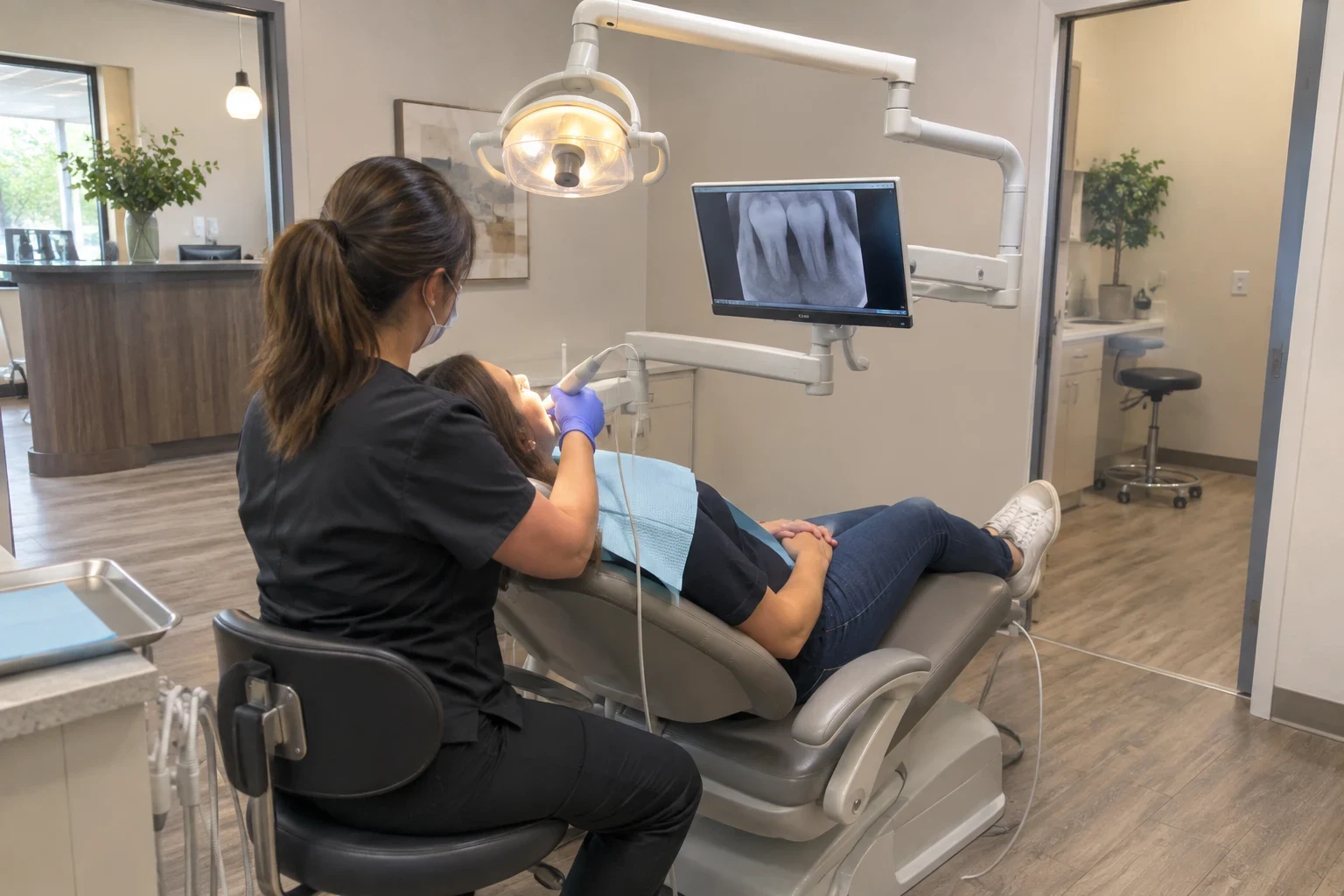
We take digital X-rays and, when the problem sits deeper in the bone, a CBCT scan. Pain often shows up in one tooth but starts in the one next to it. We want to treat the right tooth.
Pain and infection control
We numb the area, clean out the cause and drain an abscess if one has formed. If you need antibiotics, we tell you why and for how long.
Temporary repairs
A lost filling or a sharp broken edge can get temporary material at the same visit. It seals the tooth and protects the nerve until the permanent repair.
Re-cementing a loose crown
If your crown came off in one piece and the tooth under it is sound, we can often clean it and put it back. If there's decay underneath, we show you on the X-ray.
A written plan for the permanent fix
You leave knowing what comes next. That might be a root canal, a new crown, an extraction or an implant, and you'll know what each option is made of.
Signs you shouldn't wait on
- Throbbing pain that wakes you up
- Pain that gets worse when you lie down often means pressure inside the tooth from infection. It rarely goes away on its own.
- Swelling in the gum, cheek or jaw
- Swelling means infection is spreading. If it reaches your eye or makes it hard to swallow or breathe, go to a hospital first.
- A crack you can see or feel
- A cracked tooth can split further with every bite. Chew on the other side and keep it clean until we see it.
- A crown, filling or bridge came out
- Keep the piece and bring it with you. The open tooth is weaker and more sensitive, and it can shift if left bare too long.
- A tooth knocked loose or out
- Hold it by the top, not the root. Keep it in milk and call us right away, because time matters for saving it.
How an urgent visit goes
- 1
You tell us what happened
On the phone we ask where it hurts, how long it's been and whether there's swelling. That tells us how to set up the visit and how soon to see you.
- 2
Exam and imaging
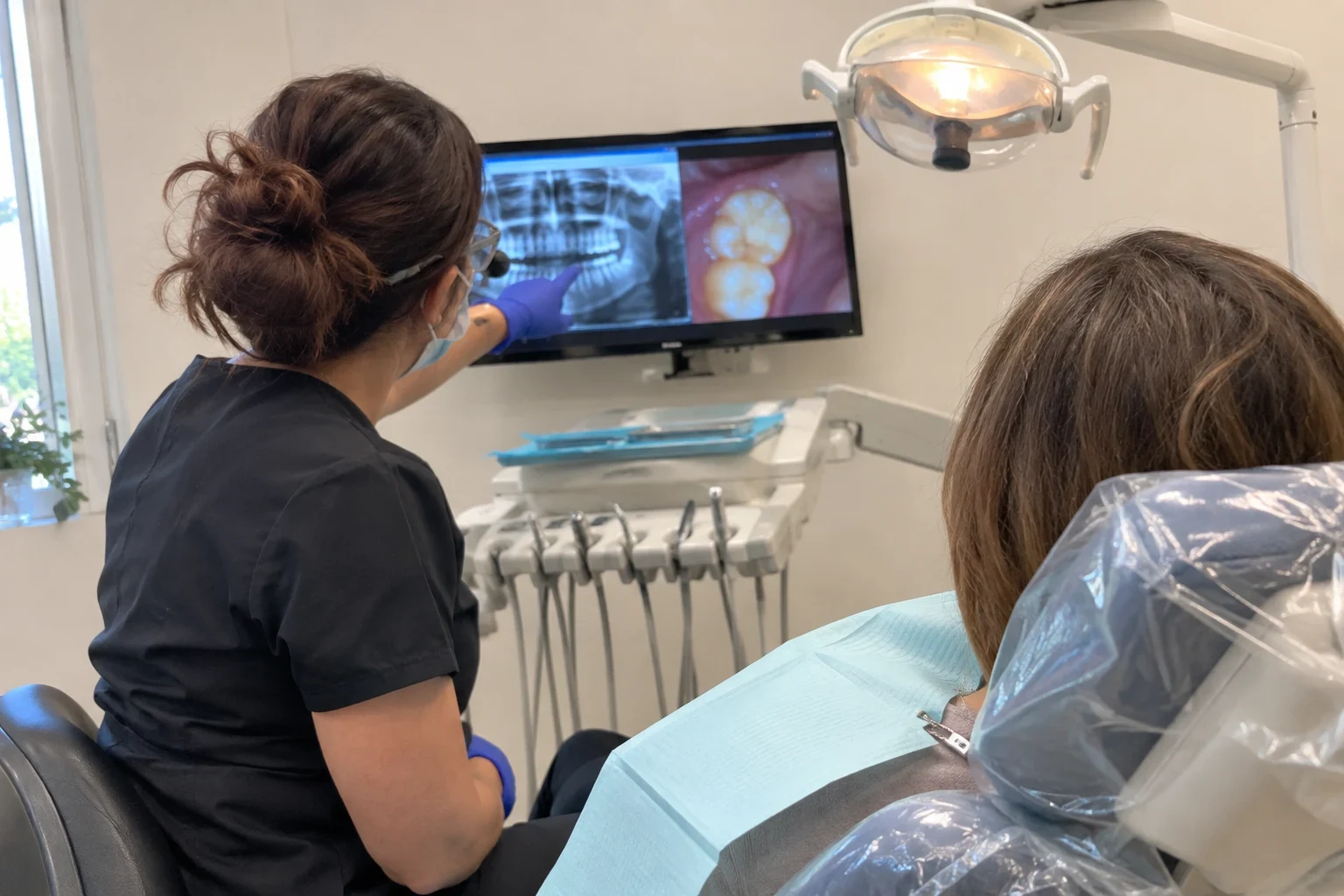
We look at the tooth, test it for cold and pressure, and take X-rays. A CBCT scan comes in when we need to see roots or bone in 3D.
- 3
Relief comes first
We numb the area and deal with the cause, whether that's draining an infection, sealing an exposed nerve or smoothing a broken edge. Most patients feel better before they leave.
- 4
We talk through the permanent fix
Then we sit down and go over the options. You'll hear how each material holds up, how long the work takes and what it costs. There's no pressure to decide that day.
What moves the cost of urgent dental care
The first visit is usually the smaller part of the bill. What drives the total is what we find and which repair you choose. We give you a written estimate before permanent work starts, so you know what insurance covers and what's left.
- What's causing the problem
- A lost filling is a short fix. An infected nerve may need a root canal. A tooth split below the gum line usually has to come out.
- The material for the final repair
- Composite bonding costs less than a crown. Zirconia and porcelain crowns cost more but hold up better under chewing. An implant costs the most up front and is the longest-lasting way to replace a lost tooth.
- Imaging needs
- Most visits need only standard digital X-rays. A CBCT scan adds to the cost but shows bone and roots clearly when we're planning an extraction or implant.
- Insurance and membership
- We're in-network with 15+ major PPO dental insurance plans. Patients without insurance can ask about our in-house membership plan.
Questions about urgent dental care
- Can you see me today?
- It depends on the schedule that day. Tell us what's going on and we'll find the soonest opening we can. If swelling is spreading or you have trouble breathing or swallowing, go to a hospital first.
- What does the $25 focused evaluation include?
- For $25 the dentist gives the problem area a full, thorough exam and takes digital X-rays. When we need a 3D look at the roots or bone, a CBCT scan is part of that same price. Then we sit down with you, map out a treatment plan and answer your questions. It's a good fit when one tooth is acting up and you want answers before you commit to anything.
- Is a temporary filling good enough?
- For a few weeks, yes. Temporary material is softer than a permanent filling, so it wears down and can start to leak. Plan on replacing it with composite or a crown once the pain has settled.
- What if my tooth can't be saved?
- We take it out gently and talk about replacing it. A dental implant stands on its own and doesn't touch the teeth beside it. A bridge is faster but means shaping the neighbor teeth, and a partial denture costs less but comes in and out. Our Extractions and Dental Implants pages cover each in more detail.
- Can I pay over time?
- Yes. You can split the cost of treatment into payments over as long as 24 months, with no interest added. Finding out if you're preapproved won't touch your credit score. We walk through the numbers with you before any permanent work begins.
Get the pain looked at and your options laid out
Tell us what happened and we'll set up a visit. New patients can also ask about our $89 new patient special for a full exam and cleaning once the urgent problem is handled.